
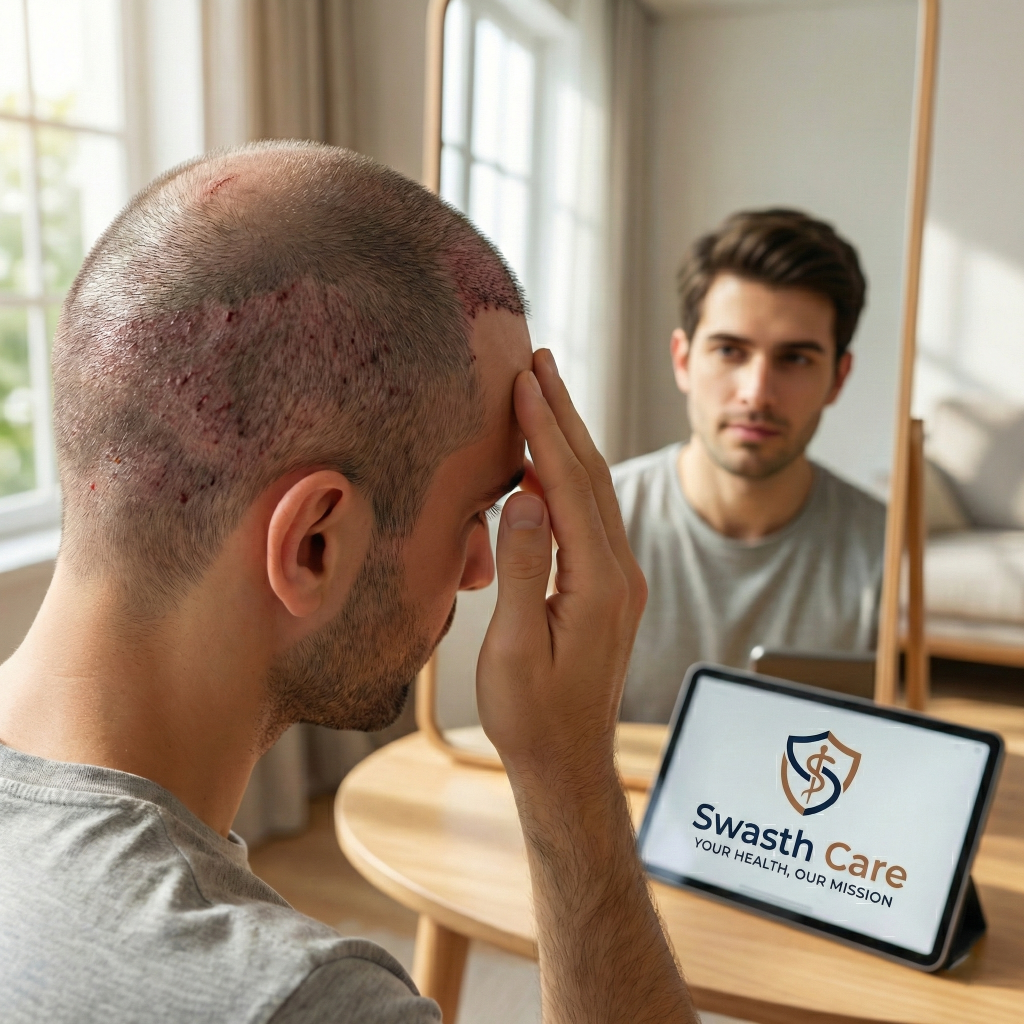
Thinking about a hair transplant can bring excitement and nervousness at the same time. If you are considering the procedure, it is completely natural to ask about hair transplant side effects and how safe the treatment really is.
The good news is that hair transplant surgery is generally safe when performed by experienced professionals. However, like any medical procedure, there are some temporary side effects and rare risks you should understand before making your decision.
Let us walk through everything in a simple and honest way so you can feel confident and informed.
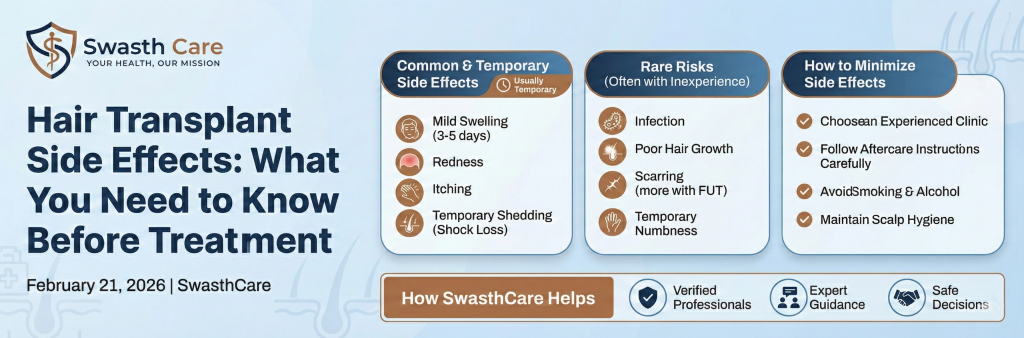
Common Hair Transplant Side Effects
Most hair transplant side effects are mild and temporary. They usually settle within a few days to a couple of weeks.
1. Mild Swelling
You may notice slight swelling around the forehead or eyes. This typically improves within three to five days.
2. Redness
Redness in the treated area is common after the procedure. It fades gradually as your scalp heals.
3. Itching
As the scalp recovers, itching can occur. This is usually part of the natural healing process.
4. Temporary Shedding Also Known as Shock Loss
Many patients experience temporary shedding of transplanted hair within the first few weeks. This can feel alarming, but it is completely normal. New and permanent hair growth usually begins within three to four months.
These side effects are a normal part of recovery and rarely cause long term problems when proper care is taken.
Rare Risks You Should Know
Although uncommon, certain complications can occur, especially if the procedure is performed at an inexperienced clinic.
Infection
Infections are rare but possible. Proper hygiene and aftercare significantly reduce this risk.
Poor Hair Growth
If graft handling is not done correctly, growth may be uneven or limited.
Scarring
Scarring is more commonly associated with the FUT technique. Choosing a skilled surgeon minimizes visible scars.
Temporary Numbness
Some patients report temporary numbness in the treated area. Sensation usually returns over time.
Understanding these risks empowers you to make safer choices.
How to Minimize Hair Transplant Side Effects
The most effective way to reduce hair transplant side effects is preparation and proper aftercare.
Choose an Experienced Clinic
Your results and safety largely depend on the expertise of the surgeon. Research credentials, reviews, and before and after results.
Follow Aftercare Instructions Carefully
Your doctor will provide detailed instructions. Following them strictly helps ensure smooth healing.
Avoid Smoking and Alcohol
Both can slow healing and increase complications.
Maintain Scalp Hygiene
Gentle washing and cleanliness are essential during recovery.
When you treat your scalp with care, it rewards you with healthy and natural looking growth.
Is Hair Transplant Permanent
Yes. Transplanted hair is typically resistant to hair loss because it is taken from areas genetically protected from balding. Once the new hair grows, it continues to grow naturally for life.
However, maintaining overall scalp health is important for the best long term results.
Why Expert Guidance Truly Matters
Many complications related to hair transplant side effects happen because patients choose clinics based only on low cost or marketing promises.
Your hair is deeply connected to your confidence and identity. It deserves expert hands and ethical care.
SwasthCare helps you connect with verified and experienced professionals so you can make informed and safe decisions without fear or confusion.
If you are considering a hair transplant and want trusted guidance, now is the right time to ask questions and explore your options safely.
Get safe and expert hair transplant guidance today.