
Hair Restoration Techniques
Advanced Hair Transplant Solutions
Explore the major hair transplant methods, compare recovery and suitability, and learn what to expect — all in one place.
 Before
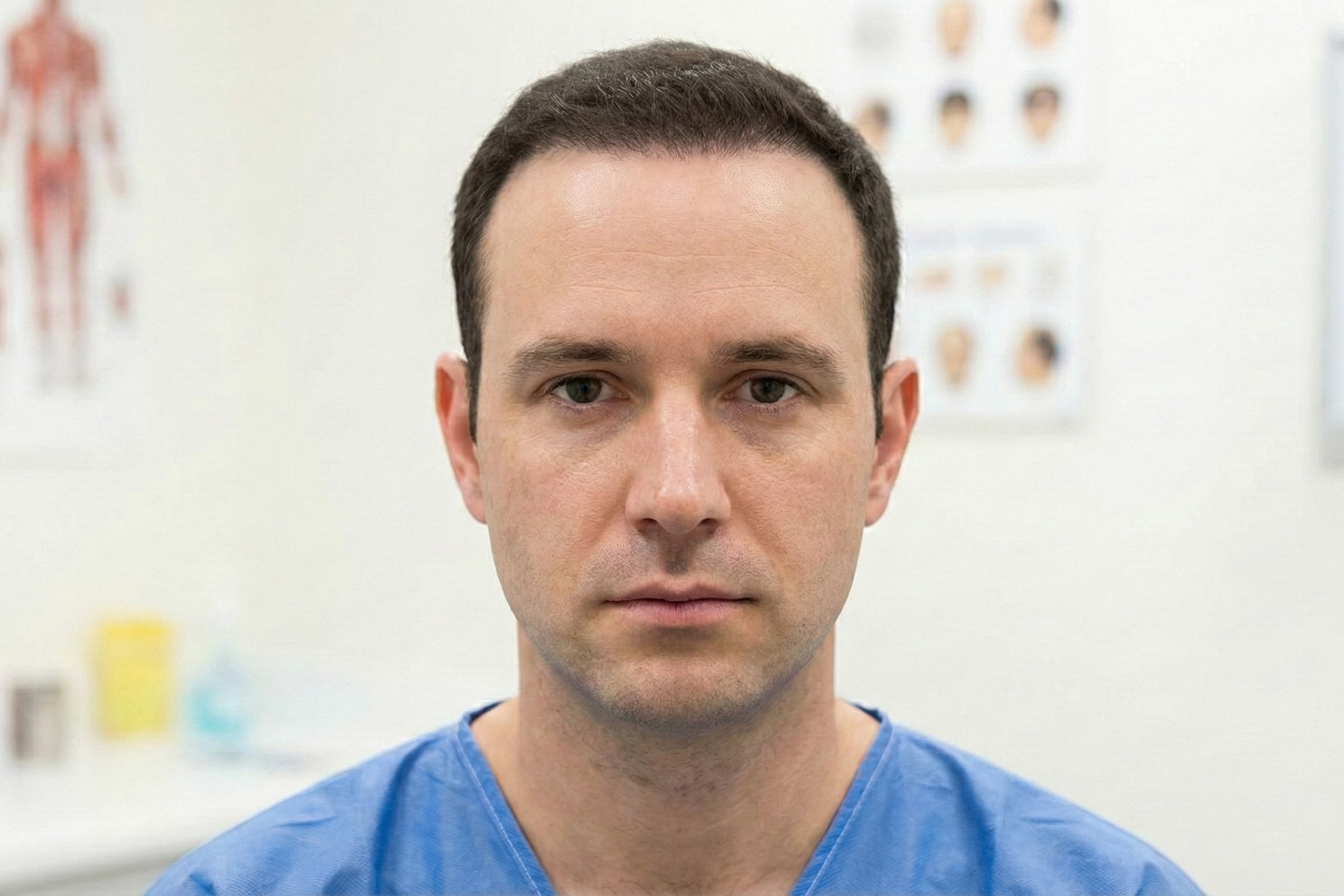 After
After
Slide to Compare
Procedure time
Typically 4–8 hours (varies by graft count)
Downtime
Most return to routine activities in a few days
Visible growth
Early growth often starts around 3–4 months
What to expect, step-by-step
A great transplant is equal parts technique and planning — donor assessment, hairline design, and careful post-op guidance all matter.
Consultation & design
Donor analysis, density goals, and natural hairline mapping.
Procedure day
Comfort-focused local anesthesia with meticulous graft handling.
Early recovery
Washing routine, swelling care, and activity guidance.
Growth timeline
Shedding is normal; steady regrowth follows over months.

Non-Surgical
PRP Therapy (Platelet-Rich Plasma)
Support hair thickness with your body’s growth factorsOverview
PRP therapy uses a concentrated portion of your own blood (platelets and growth factors) to support scalp health and help reduce shedding. It’s commonly used for early hair thinning, diffuse loss, and as a supportive treatment before/after a transplant.
How It Works
1
Assessment: We evaluate pattern, shedding, and scalp health to confirm suitability.
2
Blood draw: A small sample of blood is collected.
3
Centrifuge: The sample is processed to isolate platelet-rich plasma.
4
Application: PRP is delivered to the scalp (typically via micro-injections).
5
Sessions: A series is usually recommended, followed by maintenance as advised.
6
Aftercare: Simple scalp care and activity guidance for the next 24–48 hours.
Benefits
- Non-surgical and uses your own blood
- Can help reduce shedding in suitable cases
- Often used as an adjunct with transplant planning
- Minimal downtime
- Scalp-focused treatment
Considerations
- Works best in early-to-moderate thinning (not advanced baldness)
- Requires multiple sessions for best response
- Results vary by individual and underlying cause
- Mild soreness or temporary swelling can occur
Recovery
Most people return to routine activities the same day. You may be advised to avoid vigorous exercise, heat exposure, and harsh scalp products for a short period.
Ideal For
People with early thinning, increased shedding, diffuse thinning, or those looking to support hair quality alongside medical management or transplant planning.
PRP FAQs
No, PRP and hair transplants serve different purposes. A hair transplant surgically moves permanent hair follicles to bald areas to restore coverage. PRP is a non-surgical maintenance therapy designed to improve the health of existing hair follicles, slow down shedding, and thicken miniaturized hair. While PRP can be an excellent supportive treatment to enhance transplant results, it cannot regrow hair on completely bald scalp where follicles are no longer active.
Hair growth is a slow biological process, so patience is key. Most patients report a reduction in hair shedding as the first sign of improvement, typically after the 2nd or 3rd session (around 2-3 months). Visible improvements in hair texture, thickness, and overall scalp coverage usually become noticeable after the 4th session (around 4-6 months). Consistency with the treatment protocol is essential for optimal results.
For most patients, we recommend an initial loading phase of 4 to 6 sessions, spaced 4 weeks apart. This helps to jumpstart the hair follicles into the growth phase. Once the desired improvement is achieved, maintenance sessions are typically required every 4 to 6 months to sustain the results, as hair loss is often a progressive condition.
Discomfort is generally minimal. We use very fine needles for the injections, and a topical anesthetic (numbing cream) or a vibration device can be applied to the scalp beforehand to minimize sensation. Most patients describe the feeling as a mild pinching or pressure. The entire injection process usually takes only 10-15 minutes.
Since PRP uses your own blood, the risk of allergic reaction or rejection is virtually non-existent. Common, temporary side effects are mild and localized to the injection sites, including slight redness, mild swelling (which may settle on the forehead for a day), or tenderness. These typically resolve within 24 to 48 hours. We provide full aftercare instructions to ensure a smooth recovery.
While safe for most, PRP may not be effective or suitable for individuals with active scalp infections, history of certain blood disorders (like platelet dysfunction syndromes), chronic liver disease, or those on heavy blood thinners. It is also less effective for patients with advanced balding (shiny scalp) where follicle dormancy is permanent. A consultation is necessary to determine if PRP is the right choice for you.
Non-Surgical
GFC Therapy (Growth Factor Concentrate)
A concentrated, clinic-prepared growth factor approachOverview
GFC therapy is a clinician-delivered scalp treatment designed to provide a concentrated blend of growth factors to support hair follicle function. It’s commonly positioned for people with early thinning, recurrent shedding, or as an adjunct to transplant planning.
How It Works
1
Consultation: We confirm the hair loss pattern and suitability.
2
Preparation: A growth-factor concentrate is prepared from your blood under strict clinical protocols.
3
Delivery: The concentrate is applied to targeted scalp areas.
4
Series plan: Treatments are typically scheduled as a series for cumulative benefits.
5
Follow-up: Progress tracking and maintenance recommendations.
Benefits
- Non-surgical option for suitable candidates
- Targets scalp and follicle environment
- Often combined with medical management
- Minimal downtime
Considerations
- Requires multiple sessions
- Not a replacement for transplant in advanced baldness
- Individual response varies
Recovery
Downtime is typically minimal. Mild tenderness can occur. Your clinician will guide post-care for the first 24–48 hours.
Ideal For
People with early thinning or shedding who want a clinician-delivered scalp-support treatment, often alongside other therapies.
GFC FAQs
GFC is often considered an advanced, next-generation evolution of PRP. While PRP contains platelets, red blood cells (RBCs), and white blood cells (WBCs), GFC is a pure concentration of growth factors extracted directly from your platelets without the RBCs or WBCs. This typically results in less pain during injection, lower risk of inflammation, and potentially more consistent results due to the higher concentration of growth factors.
A standard protocol usually involves 3 to 4 sessions spaced approximately 30 days apart. However, the exact number may vary depending on the severity of hair loss and individual response to the treatment. Maintenance sessions may be advised once or twice a year thereafter.
GFC is generally less painful than standard PRP because it is free of red and white blood cells, which can sometimes cause inflammation or stinging. Most patients tolerate the procedure very well with just mild discomfort, often described as light pinpricks.
Patients often notice a reduction in hair fall after the first or second session. Visible improvement in hair thickness and density typically begins to appear after the third session (around 3 months). Full results continue to develop over several months as the growth factors stimulate the hair follicles.
Non-Surgical
Mesotherapy for Hair
Micro-delivery of scalp-supporting ingredientsOverview
Hair mesotherapy involves clinician-delivered micro-injections into the scalp with solutions intended to support scalp health. It may be used in select cases for thinning or shedding as part of a broader plan. The customized cocktail of nutrients aims to nourish the hair follicles directly at the root.
How It Works
1
Assessment: We review your pattern, scalp health, and expectations.
2
Treatment plan: The session schedule is planned based on goals.
3
Micro-injections: Small amounts of the nutrient blend are delivered into targeted scalp areas.
4
Aftercare: Simple guidance to reduce irritation and support recovery.
Benefits
- Non-surgical procedure
- Targets scalp areas directly for maximum absorption
- Can be combined with other hair-loss approaches
- Nourishes follicles with essential vitamins and minerals
Considerations
- Best used in selective cases as advised
- May cause temporary tenderness or redness
- Results vary and depend on the underlying cause of hair loss
Recovery
Usually minimal downtime. Temporary scalp sensitivity can occur. Avoid heavy sweating and harsh scalp products for a short period as advised.
Ideal For
Selective cases of thinning or shedding where a clinician recommends mesotherapy as part of a combined plan to improve scalp health and hair quality.
Meso FAQs
Mesotherapy is not a permanent cure, especially for genetic hair loss (Androgenetic Alopecia), which is a progressive condition. However, it can significantly reduce active hair fall, extend the hair growth phase, and improve hair quality when used regularly. Maintenance sessions are typically required to sustain the benefits.
The "cocktails" used in mesotherapy are customized but generally contain a blend of essential vitamins (like Biotin), minerals, amino acids, co-enzymes, and sometimes DHT blockers or other pharmaceutical agents tailored to the patient's specific type of hair loss.
Most patients experience only mild discomfort. The injections are very shallow (into the mesoderm), and very fine needles are used. If you are sensitive to pain, a topical numbing cream can be applied to the scalp 30-45 minutes before the procedure to make it virtually painless.
An initial course usually consists of 6 to 10 sessions, performed weekly or bi-weekly. Once the hair fall is controlled and visible improvement is seen, the frequency is reduced to maintenance sessions (e.g., once a month) to preserve the results.
Non-Surgical
Medical Management (Informational Guidance Only)
Evidence-based options like Minoxidil / Finasteride — under clinician guidanceOverview
Medical management may include topical or oral medications that target common causes of hair loss, such as androgenetic alopecia (pattern baldness). This section is for informational guidance only — always consult a qualified clinician before starting, stopping, or changing any medication to understand risks, side effects, and suitability for your specific condition.
How It Works
1
Diagnosis: Identify the hair loss type (pattern loss, diffuse shedding, medical causes).
2
Medication discussion: Options like Minoxidil and Finasteride may be discussed based on suitability.
3
Baseline + monitoring: Progress is monitored over months, adjusting plans as needed.
4
Long-term plan: Many medical therapies require ongoing use for sustained benefit.
Benefits
- Non-surgical approach
- Often first-line for early pattern hair loss
- Can support and protect native hair alongside transplant planning
- Evidence-based efficacy for stabilization
Considerations
- Not everyone is a candidate — clinician assessment is essential
- Side effects and contraindications exist
- Results take time and require consistency
- This is informational guidance only — not a prescription
Recovery
No procedure recovery. Follow clinician guidance on use, expectations, and monitoring. Consistency is key for effectiveness.
Ideal For
People with early-to-moderate pattern hair loss or thinning who want an evidence-based, clinician-guided approach before or instead of surgery.
Medical FAQs
No, self-medicating is strongly discouraged. While Minoxidil is often available over the counter, oral Finasteride is a prescription medication with potential side effects. A qualified doctor needs to evaluate your medical history, hair loss type, and potential risk factors before recommending any treatment plan to ensure your safety and the treatment's effectiveness.
Generally, yes. Medications like Minoxidil and Finasteride work only as long as you use them. They manage hair loss rather than cure it permanently. If you stop treatment, the hair that was preserved or regrown due to the medication will likely fall out within a few months, and the natural balding process will resume.
Yes, all medications carry potential risks. Topical Minoxidil can cause scalp irritation or unwanted hair growth on the face if it drips. Oral Finasteride may cause sexual side effects in a small percentage of men. Your clinician will explain these risks in detail during your consultation so you can make an informed decision.
Minoxidil is FDA-approved for women, though often in different concentrations than for men. Finasteride is generally not prescribed to women of childbearing age due to risks of birth defects. However, there are other medical options for female hair loss that a specialist can prescribe based on your specific hormonal profile.
Hair Transplant
FUT – Follicular Unit Transplantation (Strip Method)
The Traditional Gold Standard in Hair RestorationOverview
Follicular Unit Transplantation (FUT), also known as the strip method, is a time-tested hair restoration technique that has been refined over decades. This procedure involves removing a strip of hair-bearing skin from the donor area (typically the back of the head), which is then dissected into individual follicular units under microscopic guidance. These units are then meticulously implanted into the recipient areas to create natural-looking hair growth.
How It Works
1
Donor Area Preparation: The back of the scalp is numbed with local anesthesia, and a strip of hair-bearing skin is carefully removed. The width and length depend on the number of grafts needed.
2
Microscopic Dissection: The strip is passed to a team of technicians who use stereo microscopes to dissect it into individual follicular units containing 1-4 hairs each.
3
Recipient Site Creation: Tiny incisions are made in the balding areas at precise angles and densities to mimic natural hair growth patterns.
4
Graft Implantation: Each follicular unit is carefully placed into the recipient sites, ensuring proper depth and angle for optimal growth.
5
Closure: The donor area is closed using advanced suturing techniques, leaving a thin, easily concealable scar.
Benefits
- Higher graft survival rate (up to 95%)
- Cost-effective for large sessions
- Can harvest more grafts in a single session
- Better for patients with limited donor area
- Proven long-term results
- Ideal for advanced hair loss (Grade 5-7)
Considerations
- Linear scar at the donor site
- Slightly longer recovery time
- Sutures need to be removed after 10-14 days
- Not suitable for those wanting very short hairstyles
Recovery
Most patients can return to non-strenuous work within 2-3 days. The sutures are removed after 10-14 days. Initial shedding of transplanted hair occurs in 2-4 weeks, followed by new growth starting around 3-4 months. Full results are visible in 12-18 months.
Ideal For
Patients with advanced hair loss (Norwood Grade 5-7), those requiring large numbers of grafts (3000+), patients with good donor density, and those who don't mind wearing longer hairstyles.
FUT FAQs
A FUT procedure typically takes 4-8 hours depending on the number of grafts. Large sessions may be split over two days.
When performed by skilled surgeons, the scar is typically a thin line that's easily covered by hair as short as 1 inch. Advanced closure techniques minimize visibility.
FUT can yield 3,000-4,000+ grafts in a single session, making it ideal for patients needing extensive coverage.
FUT has a graft survival rate of 90-95% when performed by experienced surgeons, making it one of the most reliable techniques.
Hair Transplant
FUE – Follicular Unit Extraction
The Modern, Minimally Invasive ApproachOverview
Follicular Unit Extraction (FUE) represents a significant advancement in hair transplant technology. Unlike FUT, FUE involves individually extracting follicular units directly from the donor area using tiny circular punches (0.6-1.0mm in diameter). This method leaves no linear scar, making it ideal for patients who prefer shorter hairstyles or want a less invasive procedure.
How It Works
1
Donor Area Shaving: The donor area is typically shaved short to allow for precise extraction of follicular units.
2
Local Anesthesia: The donor and recipient areas are numbed with local anesthesia for a painless experience.
3
Individual Extraction: Using specialized micro-punches, individual follicular units are extracted one by one. Each punch creates a tiny circular incision around the follicle.
4
Graft Preparation: Extracted grafts are carefully sorted, cleaned, and preserved in a nutrient-rich solution.
5
Recipient Site Creation: Tiny incisions are created in the balding areas following natural hair growth patterns.
6
Implantation: Grafts are meticulously placed into the recipient sites at proper angles and densities.
Benefits
- No linear scar - only tiny dot scars
- Faster healing and recovery
- Minimal post-operative discomfort
- Suitable for short hairstyles
- Can harvest from body hair if needed
- Less invasive procedure
Considerations
- Transection rate can be higher if not done properly
- May require larger donor area shaving
- Takes longer for large sessions
- May need multiple sessions for extensive coverage
Recovery
Most patients can resume normal activities within 2-3 days. The tiny extraction wounds heal within a week, leaving barely visible dot scars. Initial shedding occurs in 2-4 weeks, with new growth starting around 3-4 months. Full results are visible in 12-18 months.
Ideal For
Patients who prefer shorter hairstyles, those wanting minimal scarring, younger patients with early-stage hair loss, and those who prefer a less invasive approach.
FUE FAQs
No, the procedure is performed under local anesthesia, so you feel virtually no pain during the extraction or implantation. Post-operative discomfort is minimal and manageable with mild pain relievers.
Most patients achieve their desired density in a single session. However, for extensive balding (Norwood 5-7), a second session may be planned 9-12 months later to add density or lower the hairline further.
Yes, FUE is the preferred method for facial hair transplants. Its ability to extract individual follicles allows for precise placement that mimics the natural growth direction of eyebrows and beards.
The main difference is the extraction method. FUT removes a strip of skin leaving a linear scar, while FUE extracts individual follicles leaving tiny, barely visible dot scars. FUE generally has a faster recovery time.
Hair Transplant
Interlocking FUE
Maximum Density Through Advanced PlacementOverview
Interlocking FUE is an advanced variation of traditional FUE that focuses on achieving maximum hair density through a specialized interlocking pattern of graft placement. This technique arranges grafts in an interwoven pattern, similar to brickwork, ensuring no gaps between transplanted follicles and creating an exceptionally dense, natural-looking result.
How It Works
1
Strategic Planning: A detailed hair design is created, mapping out the interlocking pattern to maximize coverage and density.
2
Precision Extraction: Individual follicular units are extracted using specialized micro-punches, ensuring minimal damage to surrounding follicles.
3
Pattern Mapping: The recipient area is marked with an interlocking grid pattern that ensures optimal spacing and angle for each graft.
4
Multi-Directional Implantation: Grafts are placed in alternating directions following the interlocking pattern, creating a mesh-like arrangement.
5
Layered Density: Multiple layers of grafts are strategically placed to achieve unprecedented density levels.
Benefits
- Maximum achievable density
- Exceptionally natural appearance
- No visible gaps between grafts
- Better coverage with fewer grafts
- Ideal for hairline reconstruction
- Creates fuller, thicker look
Considerations
- Requires highly skilled surgeon
- Longer procedure time
- May have slightly higher cost
- Requires careful post-op care
Recovery
Similar to standard FUE, most patients can resume normal activities within 2-3 days. The interlocking pattern may result in slightly more initial swelling, which typically resolves within a week. Full density becomes apparent at 12-18 months.
Ideal For
Patients seeking maximum density, those with limited donor hair who need optimal coverage, hairline restoration requiring natural appearance, and anyone wanting the most natural-looking results possible.
Interlocking FAQs
Regular FUE places grafts in a linear or random arrangement. Interlocking FUE places grafts in a specific brickwork pattern. This overlapping structure eliminates "see-through" gaps and creates the illusion of significantly higher density.
No, usually the opposite. Because the pattern is so efficient at covering the scalp, we can often achieve better visual coverage using the same number of grafts compared to traditional placement methods.
It can be slightly more expensive due to the advanced skill and longer time required to execute the precise interlocking pattern, but the denser results often make it a worthwhile investment.
Most patients eligible for FUE are eligible for Interlocking FUE. It is especially recommended for patients with fine hair or lower donor density, as the technique maximizes the visual impact of every available graft.
Hair Transplant
DHT - Direct Hair Transplant
Streamlined Precision for Optimal ResultsOverview
Direct Hair Transplant (DHT) is an innovative technique that combines extraction and implantation into a more streamlined process. Unlike traditional methods where grafts are stored before implantation, DHT minimizes the time grafts spend outside the body, potentially improving survival rates and results. This technique uses specialized implanter pens that allow simultaneous incision creation and graft placement.
How It Works
1
Immediate Implantation Planning: Unlike traditional methods, DHT is designed for rapid implantation after extraction.
2
Sequential Extraction: Follicular units are extracted using micro-punches and immediately loaded into implanter pens.
3
Direct Loading: Extracted grafts are placed directly into DHT implanter pens without lengthy storage.
4
Simultaneous Incision and Placement: The implanter pen creates the recipient incision and places the graft in one motion.
5
Reduced Handling: Grafts experience minimal manipulation, reducing trauma and improving survival.
Benefits
- Minimal graft handling
- Reduced time outside body
- Higher potential survival rate
- Precise angle control
- Less trauma to grafts
- Potentially better results
Considerations
- Requires specialized equipment
- May be more expensive
- Requires experienced surgeon
- Not suitable for all hair types
Recovery
Recovery is similar to FUE, with most patients returning to normal activities within 2-3 days. The reduced trauma to grafts may result in less swelling and faster initial healing. Full results are visible in 12-18 months.
Ideal For
Patients seeking optimal graft survival, those wanting the latest technology, candidates with fine or delicate hair, and anyone looking for the most efficient transplant method.
DHT FAQs
In standard FUE, holes are pre-made and then grafts are inserted. In DHT, the extraction and implantation happen almost simultaneously using an implanter pen, which creates the channel and places the hair in one step, reducing the time grafts are out of the body.
DHT minimizes graft handling and out-of-body time, which can theoretically improve graft survival rates. However, in the hands of an experienced surgeon, both modern FUE and DHT produce excellent, natural-looking results.
Yes, DHT is often slightly more expensive than standard FUE due to the specialized equipment (implanter pens) required and the advanced technical skill needed by the surgical team to perform the simultaneous steps.
A DHT procedure typically takes about 6-8 hours, similar to FUE. While the implantation step is streamlined, the careful handling and loading of pens require precision and time.
Hair Transplant
Robotic FUE
AI-Powered Precision Hair RestorationOverview
Robotic FUE represents the cutting edge of hair transplant technology, utilizing advanced robotic systems with artificial intelligence to perform the extraction phase of FUE with unprecedented precision. The most well-known system, ARTAS, uses computer-guided robotic arms and sophisticated imaging to identify and extract optimal follicular units, reducing human error and fatigue.
How It Works
1
3D Scalp Mapping: The robotic system creates a detailed 3D map of your scalp, identifying the best donor follicles.
2
AI Selection: Artificial intelligence algorithms analyze follicle characteristics to select the healthiest, most suitable grafts.
3
Precision Extraction: The robotic arm makes precise incisions and extracts follicular units with consistent depth and angle.
4
Real-Time Monitoring: The system continuously monitors and adjusts its technique throughout the procedure.
5
Manual Implantation: While extraction is robotic, implantation is still performed by the surgeon for optimal artistic results.
6
Data-Driven Results: The system provides detailed data about each extraction for quality control.
Benefits
- Unmatched precision and consistency
- Reduced transection rate
- No human fatigue factor
- Optimal follicle selection
- Faster extraction speed
- Detailed procedure data
Considerations
- Higher cost than manual FUE
- Limited availability
- May not suit all hair types
- Implantation still manual
Recovery
Recovery is identical to standard FUE. The precision of robotic extraction may result in slightly better healing due to consistent wound sizes. Most patients resume normal activities within 2-3 days, with full results visible in 12-18 months.
Ideal For
Patients who want the most advanced technology, those concerned about consistency, candidates with straight hair (optimal for robotic systems), and anyone seeking data-driven, precise results.
Robotic FAQs
The robot offers superior consistency and fatigue-free extraction, especially in large sessions. However, a highly skilled manual surgeon can achieve comparable results. The best choice often depends on your specific hair characteristics and budget.
The higher cost reflects the substantial investment in the robotic system (like the ARTAS machine) and the disposable kits used for each procedure, in addition to the surgeon's expertise.
No. Currently, the robot specializes in the extraction phase (harvesting grafts) and sometimes recipient site creation. The critical step of implanting the hairs to ensure a natural look is still performed manually by the surgeon.
No, because the equipment is expensive and requires specialized training, Robotic FUE is typically found only in premium, high-volume hair restoration clinics.
Hair Transplant
Robotic FUE
AI-Powered Precision Hair RestorationOverview
Robotic FUE represents the cutting edge of hair transplant technology, utilizing advanced robotic systems with artificial intelligence to perform the extraction phase of FUE with unprecedented precision. The most well-known system, ARTAS, uses computer-guided robotic arms and sophisticated imaging to identify and extract optimal follicular units, reducing human error and fatigue.
How It Works
1
3D Scalp Mapping: The robotic system creates a detailed 3D map of your scalp, identifying the best donor follicles.
2
AI Selection: Artificial intelligence algorithms analyze follicle characteristics to select the healthiest, most suitable grafts.
3
Precision Extraction: The robotic arm makes precise incisions and extracts follicular units with consistent depth and angle.
4
Real-Time Monitoring: The system continuously monitors and adjusts its technique throughout the procedure.
5
Manual Implantation: While extraction is robotic, implantation is still performed by the surgeon for optimal artistic results.
6
Data-Driven Results: The system provides detailed data about each extraction for quality control.
Benefits
- Unmatched precision and consistency
- Reduced transection rate
- No human fatigue factor
- Optimal follicle selection
- Faster extraction speed
- Detailed procedure data
Considerations
- Higher cost than manual FUE
- Limited availability
- May not suit all hair types
- Implantation still manual
Recovery
Recovery is identical to standard FUE. The precision of robotic extraction may result in slightly better healing due to consistent wound sizes. Most patients resume normal activities within 2-3 days, with full results visible in 12-18 months.
Ideal For
Patients who want the most advanced technology, those concerned about consistency, candidates with straight hair (optimal for robotic systems), and anyone seeking data-driven, precise results.
Robotic FAQs
The robot offers superior consistency and fatigue-free extraction, especially in large sessions. However, a highly skilled manual surgeon can achieve comparable results. The best choice often depends on your specific hair characteristics and budget.
The higher cost reflects the substantial investment in the robotic system (like the ARTAS machine) and the disposable kits used for each procedure, in addition to the surgeon's expertise.
No. Currently, the robot specializes in the extraction phase (harvesting grafts) and sometimes recipient site creation. The critical step of implanting the hairs to ensure a natural look is still performed manually by the surgeon.
No, because the equipment is expensive and requires specialized training, Robotic FUE is typically found only in premium, high-volume hair restoration clinics.
Hair Transplant
Sapphire FUE
Premium Blades for Superior HealingOverview
Sapphire FUE is an advanced variation of traditional FUE that uses blades made from sapphire crystals instead of steel for creating recipient incisions. Sapphire blades are smoother, harder, and maintain their sharpness longer than steel blades, resulting in smaller, more precise incisions that heal faster and with less scarring.
How It Works
1
Standard FUE Extraction: Follicular units are extracted using the same micro-punch technique as traditional FUE.
2
Sapphire Blade Incisions: Instead of steel blades, V-shaped sapphire blades create the recipient site incisions.
3
Smoother Cuts: The molecular structure of sapphire creates ultra-smooth incisions with minimal tissue trauma.
4
Precise Sizing: Sapphire blades are available in various sizes for perfect graft-to-incision matching.
5
Natural Angle Creation: The blade design allows for precise angle control, mimicking natural hair growth.
6
Standard Implantation: Grafts are placed into the sapphire-created incisions using standard techniques.
Benefits
- Faster healing and recovery
- Reduced post-operative swelling
- Smaller, less visible incisions
- Better tissue preservation
- Higher density possible
- More natural results
Considerations
- Slightly higher cost
- Requires specialized training
- Not all clinics offer it
- Best for appropriate candidates
Recovery
Sapphire FUE typically offers faster healing than traditional FUE. Patients often experience less swelling and redness, with many able to return to normal activities within 1-2 days. The superior incisions result in better crust shedding and faster scalp recovery. Full results are visible in 12-18 months.
Ideal For
Patients who prioritize fast recovery, those concerned about scarring, candidates wanting maximum density, and anyone seeking the premium FUE experience.
Sapphire FAQs
Sapphire is much harder and sharper than steel. This allows it to create V-shaped incisions that are cleaner and cause less tissue damage compared to the U-shaped incisions of steel blades, leading to faster healing and less scarring.
For many patients, yes. The benefits of reduced swelling, faster recovery, and the potential for higher density often justify the marginal price difference, especially for hairline restoration.
Because the incisions are cleaner and smaller, the initial scabbing phase often resolves 2-3 days faster than traditional FUE, and post-op redness tends to fade more quickly.
Yes. The precision of the sapphire blade allows surgeons to place incisions closer together without disrupting neighboring tissue, enabling higher graft density per square centimeter.
Hair Transplant
DHI - Direct Hair Implantation
The Choi Pen Revolution in Hair RestorationOverview
Direct Hair Implantation (DHI) is an advanced technique that uses specialized Choi Implanter Pens for direct graft placement. Unlike traditional methods that require separate incision creation and graft insertion, DHI combines both steps into one, allowing for more precise control over the angle, depth, and direction of each implanted hair. This results in highly natural-looking outcomes with maximum density.
How It Works
1
Graft Extraction: Individual follicular units are extracted using FUE technique with micro-punches.
2
Choi Pen Loading: Extracted grafts are carefully loaded into Choi Implanter Pens by trained technicians.
3
Sequential Implantation: The surgeon uses the loaded pens to implant grafts directly into the scalp.
4
One-Motion Placement: The Choi pen simultaneously creates an incision and places the graft in a single motion.
5
Precision Control: Each graft's angle, depth, and direction is controlled with exceptional precision.
6
Continuous Process: Multiple pens are loaded in rotation for efficient, continuous implantation.
Benefits
- No prior incision needed
- Maximum control over placement
- Exceptional natural appearance
- Minimal handling of grafts
- Can implant in existing hair
- No shaving required in some cases
Considerations
- More time-intensive
- Typically more expensive
- Requires highly skilled team
- May need multiple sessions for large areas
Recovery
DHI typically offers excellent recovery with minimal disruption to the scalp. Since no prior incisions are made, bleeding and swelling are often reduced. Most patients can resume normal activities within 2-3 days. Full results are visible in 12-18 months.
Ideal For
Patients seeking unshaven hair transplant, those needing implantation between existing hairs, candidates wanting maximum density, and anyone prioritizing the most natural-looking results.
DHI FAQs
While both use FUE for extraction, DHI uses the Choi Implanter Pen to combine incision and placement into one step, whereas standard FUE requires the surgeon to pre-make channels before inserting the grafts.
Yes, DHI is particularly famous for the "No-Shave" technique, as the specialized pens can easily navigate between existing long hairs without needing to shave the entire recipient area.
Generally, yes. DHI is more labor-intensive, requires a larger team of specialized technicians to load the pens, and uses precision disposable equipment, which increases the overall cost.
DHI can effectively implant thousands of grafts, though because it is a slower process, extremely large sessions (4,000+) might be split over two days to maintain graft quality.
Hair Transplant
Synthetic Hair Transplant (Selective Cases Only)
A niche option — recommended only for specific casesOverview
Synthetic hair transplantation uses biocompatible artificial fibers implanted into the scalp to create the appearance of added density. It is recommended only for specific cases after careful evaluation — it is not suitable for everyone and may not be the first choice when natural donor hair transplant options are available.
How It Works
1
Case selection: Detailed consultation to confirm suitability and discuss alternatives.
2
Scalp preparation: The scalp is assessed for inflammation, infections, and healing capacity.
3
Fiber selection: Shade, curl, and thickness are matched for a natural blend.
4
Implantation: Fibers are placed into the scalp under clinical protocols.
5
Aftercare: Scalp care guidance to reduce irritation and support retention.
6
Maintenance: Periodic reviews and maintenance may be needed.
Benefits
- Immediate cosmetic density in suitable cases
- Does not depend on donor hair availability
- Can be considered when other options are limited
Considerations
- Recommended only for selective cases
- Risk of irritation, folliculitis, or rejection in some individuals
- May require ongoing maintenance and follow-up
- Not a substitute for treating underlying hair-loss causes
Recovery
Downtime is usually minimal, but scalp sensitivity can occur. Follow your clinician’s aftercare to reduce inflammation and support retention. Strict hygiene is essential.
Ideal For
Selective candidates after specialist evaluation—typically when conventional transplant options are not suitable (due to lack of donor hair) or as a carefully chosen cosmetic alternative.
Synthetic FAQs
No, it is a niche procedure reserved for specific cases. It is typically considered when a patient has a severely depleted donor area (back of the head) and cannot undergo a natural hair transplant. A strict biocompatibility test is often required to ensure the body does not reject the artificial fibers.
Unlike a natural hair transplant, synthetic hair is not permanent in the same way. The fibers do not grow, and there is a natural attrition rate where some fibers may break or fall out over time (typically 10-20% per year). Periodic "top-up" sessions are usually required to maintain density.